By Published On: April 15, 2026Categories: Around the Shop, Garden Season, JDF Houston Shop, Provenance Stories
The French Art of Beautiful Storage
Post

The Art, Provenance and History of Faux Bois

Nico’s Notes

It’s not easy to sum up faux bois in a sentence, but here’s an attempt — faux bois is a visual design language centered in nature, and has its roots in French culture and history, most prominently at the end of the 19th century. I absolutely loved doing the research I’ve put into this article, and I aimed to keep it fun with lots of images and avoid an encyclopedic feel — enjoy!

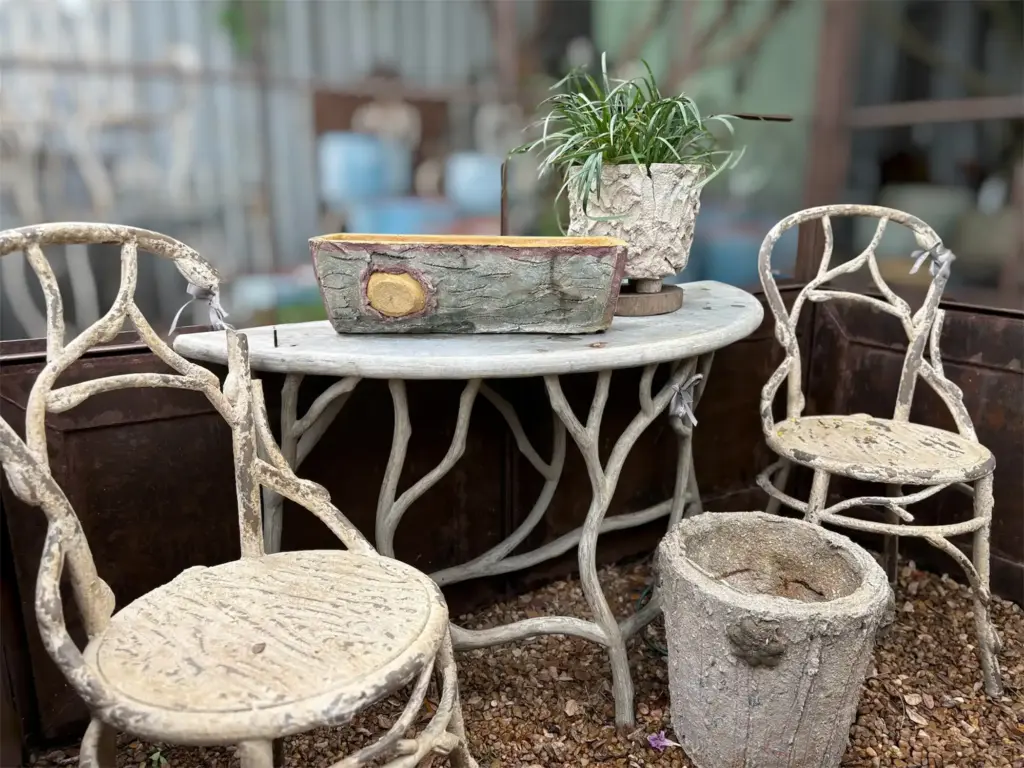
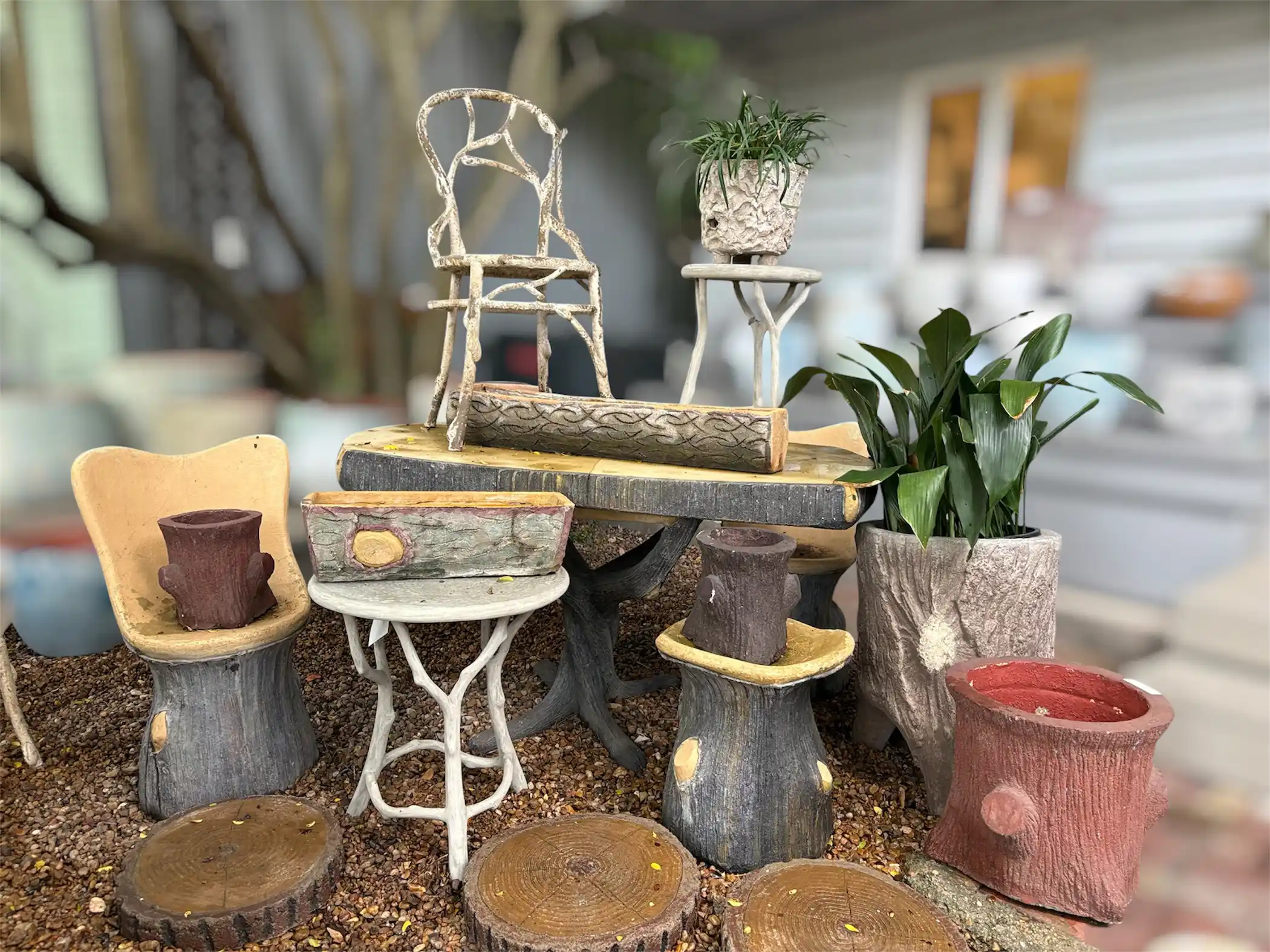
Examples of our Faux Bois selection at our Houston Shop
Some examples of our Faux Bois selection at our Houston Shop

What exactly is faux bois?

Faux bois, which is pronounced like “foh bwah” and translates to “fake wood,” is an artistic style of crafting furniture, decor, architectural elements and more in the essence of nature. Planters shaped like hollow tree stumps and fencing like interwoven tree branches, plus benches and furniture, and even entire architectural structures designed to imitate the natural world are all perfect examples of the style.
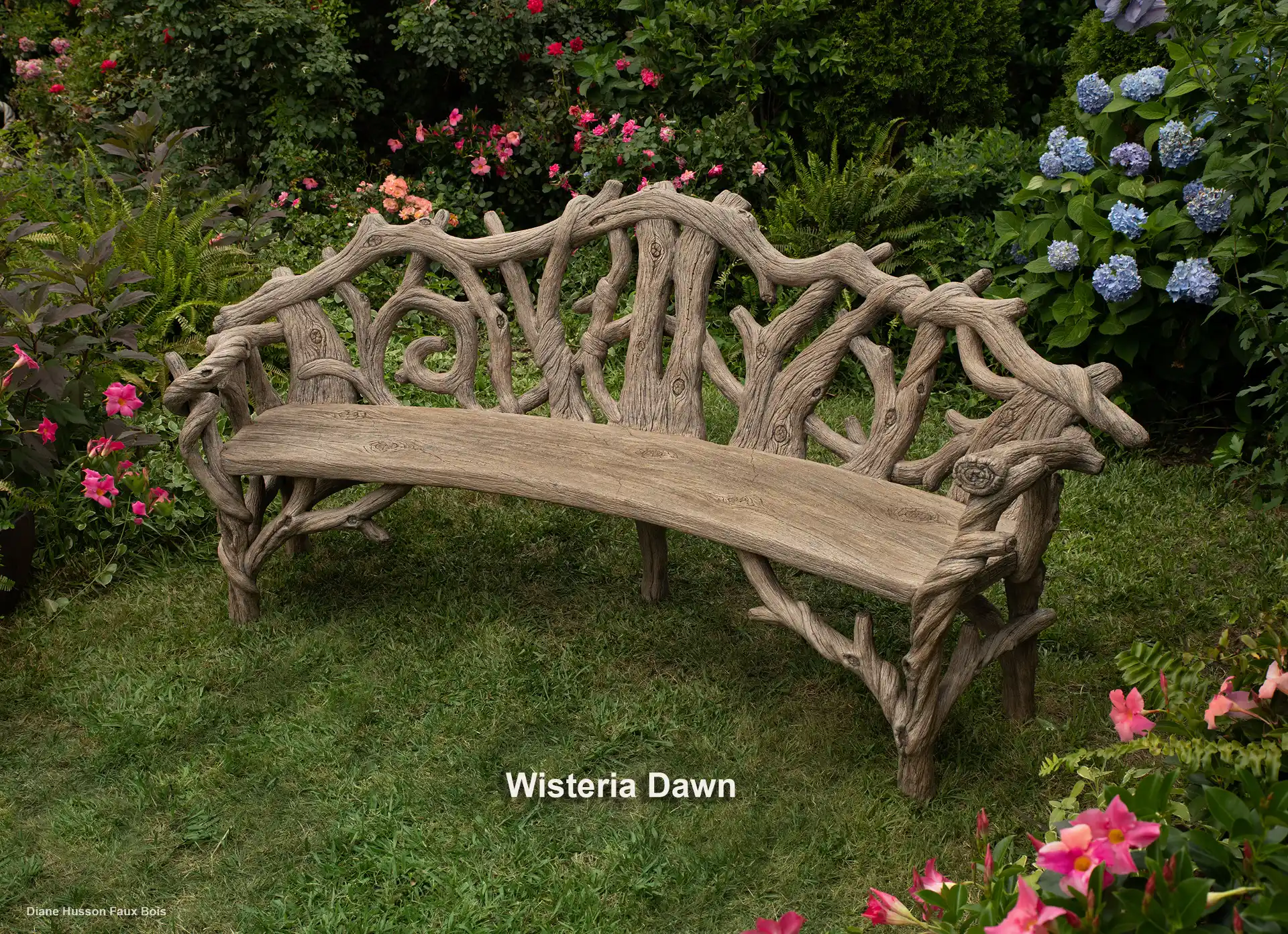
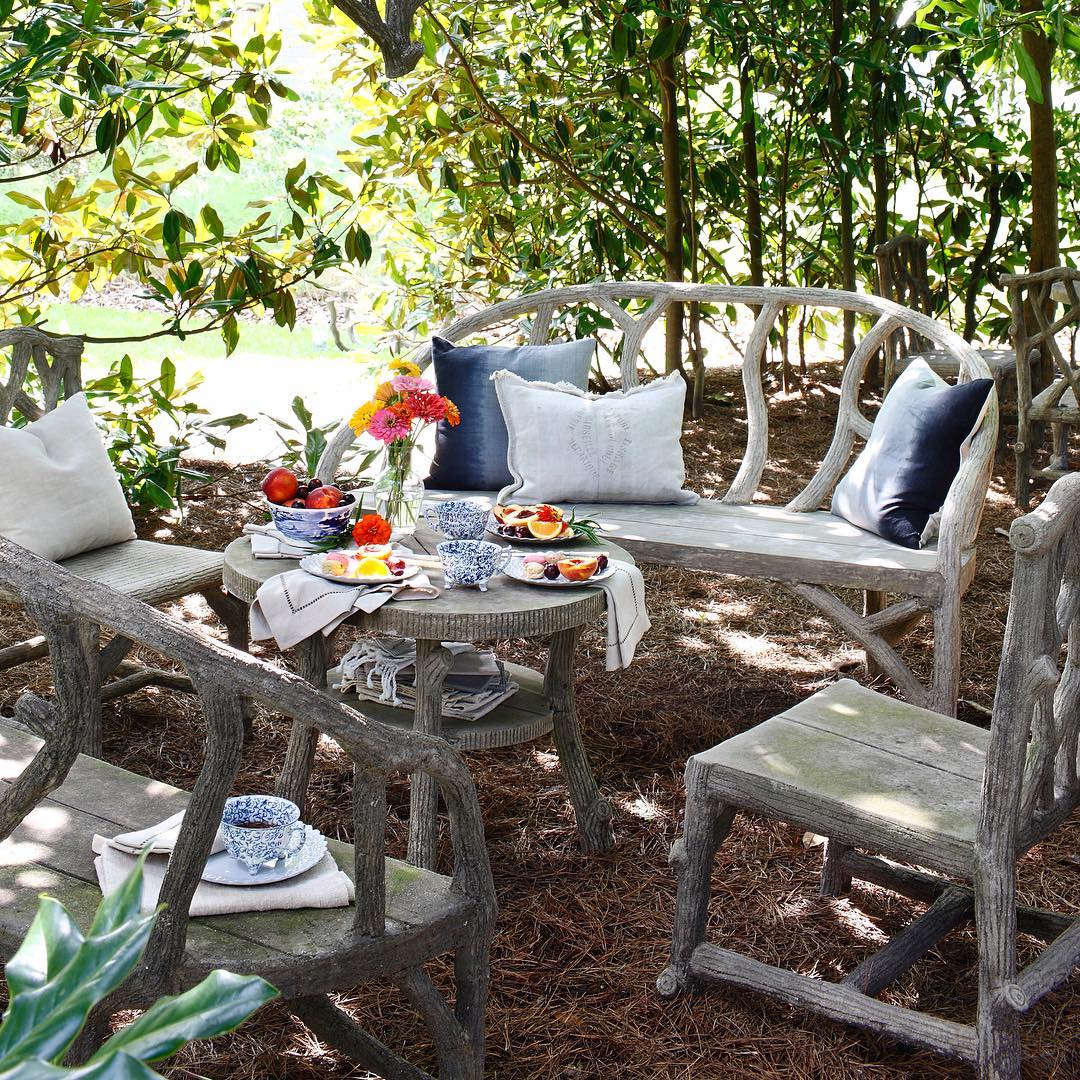
Classic example of a Faux Bois bench
Classic example of a Faux Bois bench (Image Credit: Diane Husson Faux Bois)
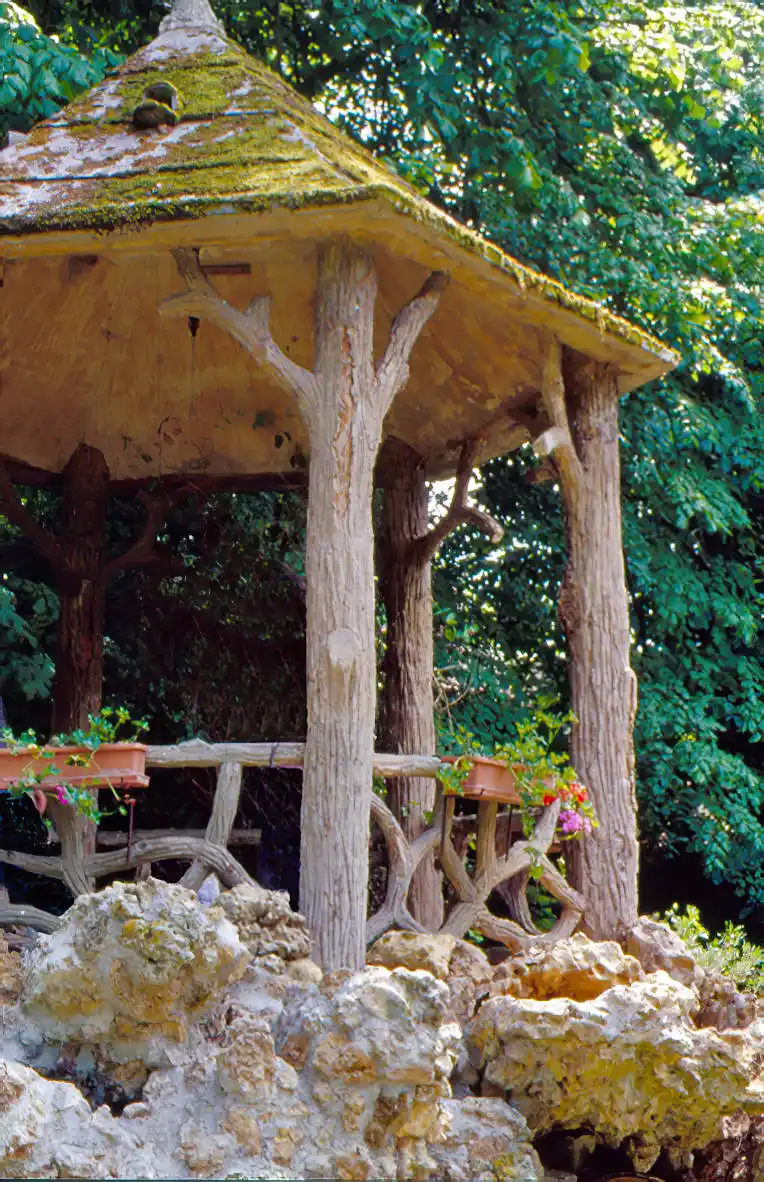
A Faux Bois Pavillion in a park in Montviette, France
A Faux Bois Pavillion in a park in Montviette, France (Image Credit: Pays d'Auge)
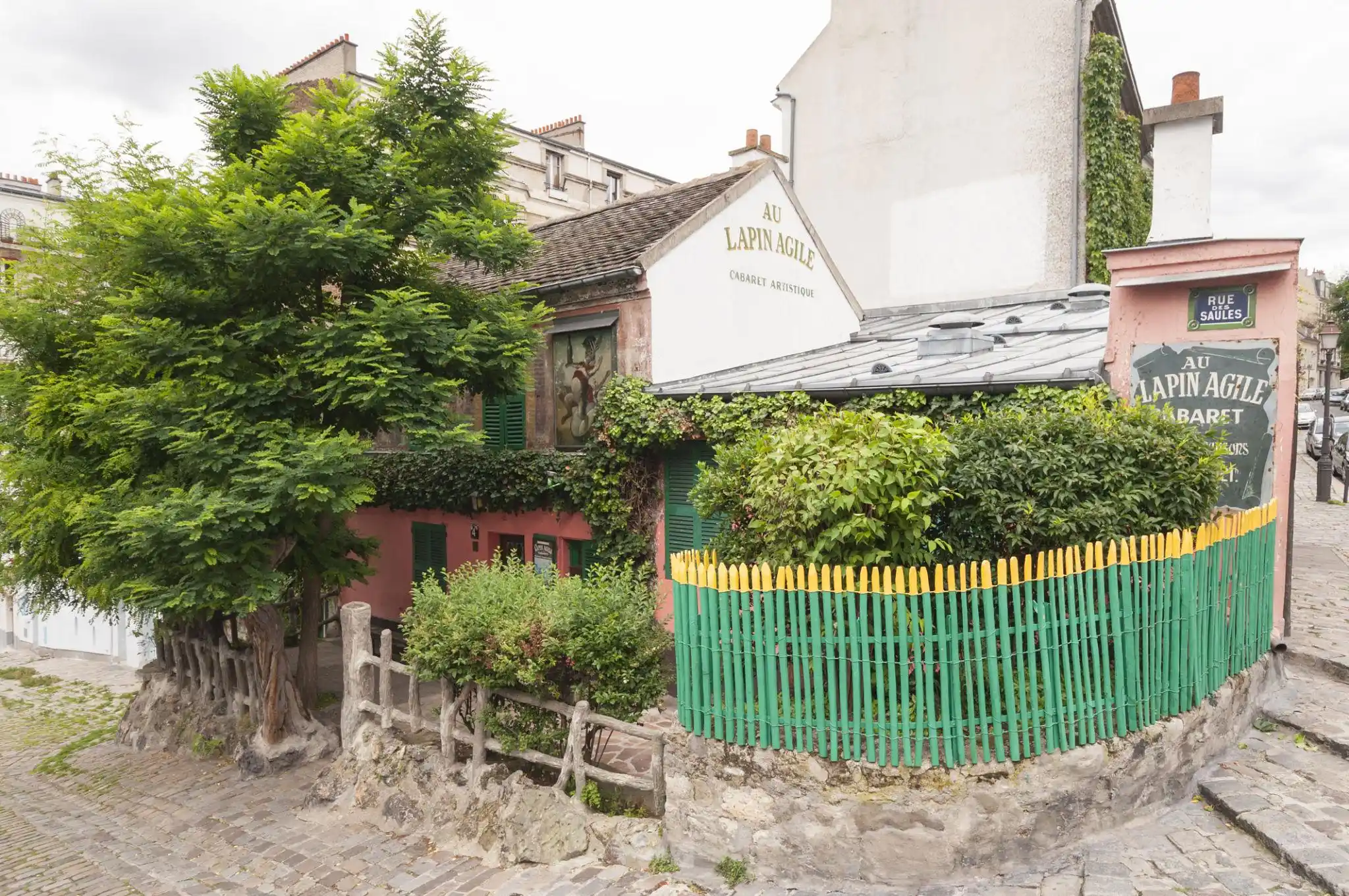
A faux bois fence railing in front of Au Lapin Agile in Montmartre, Paris
A faux bois fence railing in front of the left façade of Au Lapin Agile in Montmartre, Paris (Image Credit: Getty Images)

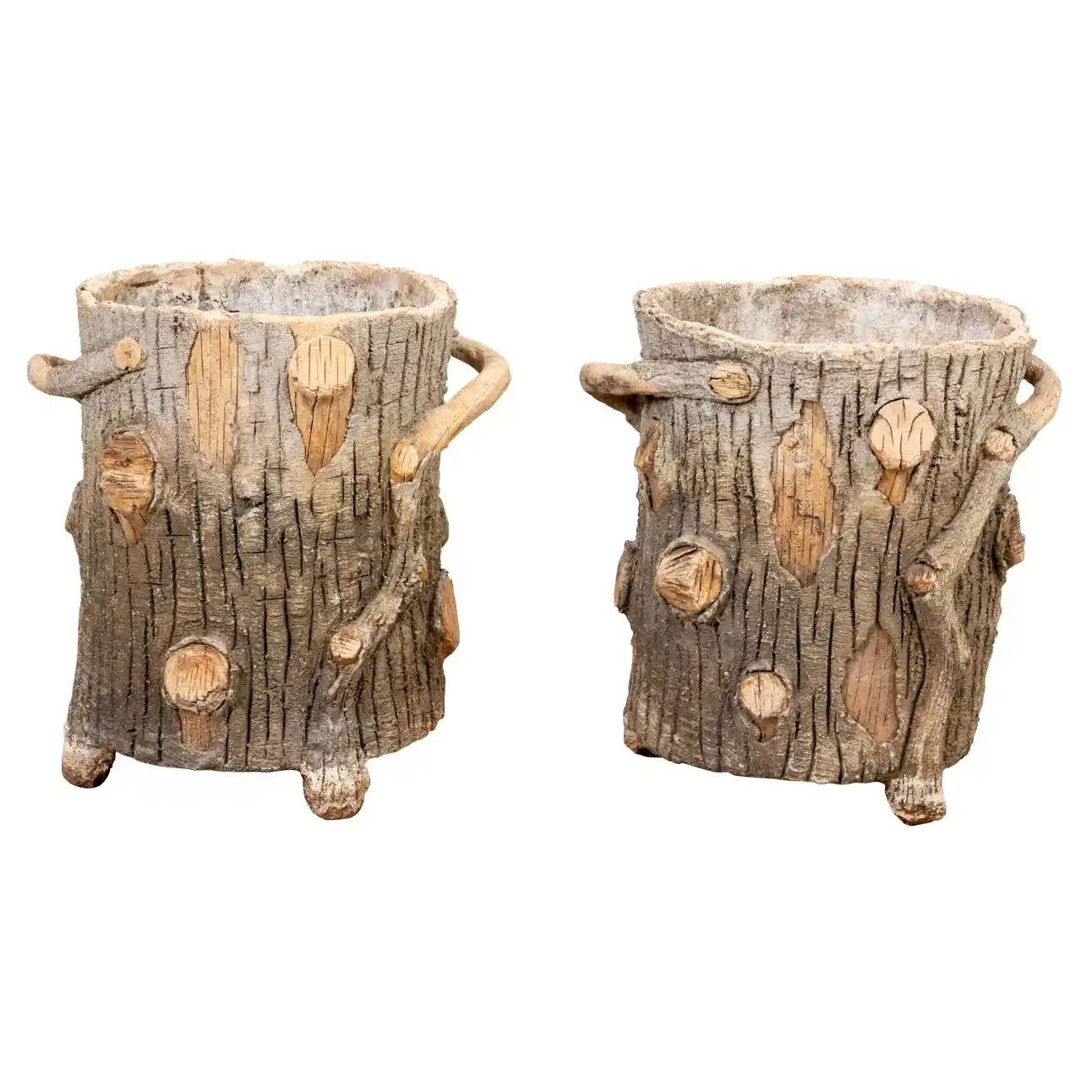
While today we can see reproduction faux bois elements crafted out of new age materials such as resin, authentic faux bois’ most key defining feature is that it is made and shaped out of concrete.
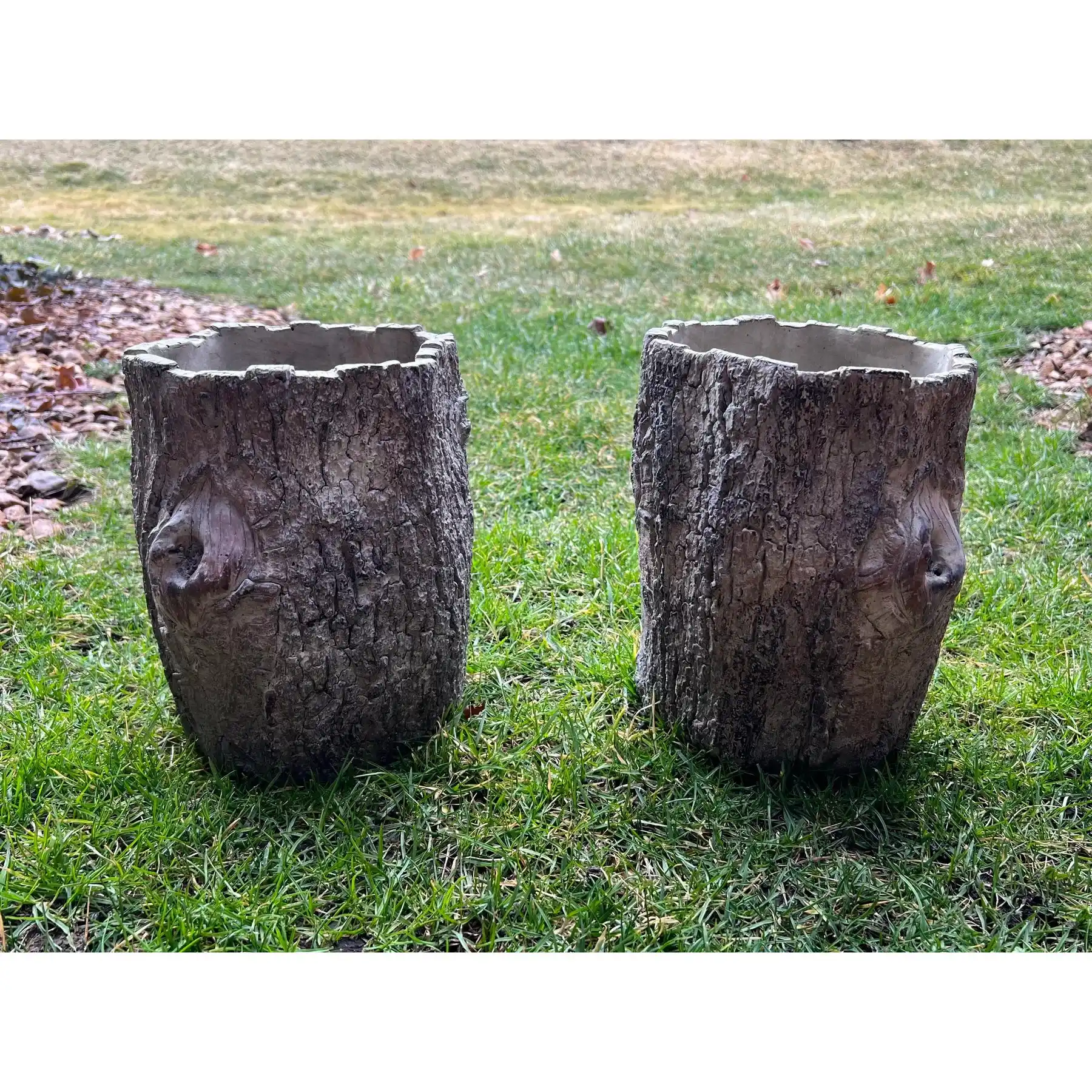
Example of Faux Bois Stump Planters
Example of Faux Bois Stump Planters (Image Credit: Chairish)
Example of Faux Bois Stump Planters
Example of Faux Bois Stump Planters (Image Credit: 1st Dibs)

So tell me, dites moi, who invented faux bois?

We sometimes hear Joseph Monier as the inventor of faux bois, but this is not entirely accurate. Monsieur Monier was a gardener by trade, and he was interested in creating planters that were durable. In the 1800s, wood and clay were commonly used for pots and planters, so with every frigid winter and thawing spring, wooden vessels would rot and clay pots would crack.
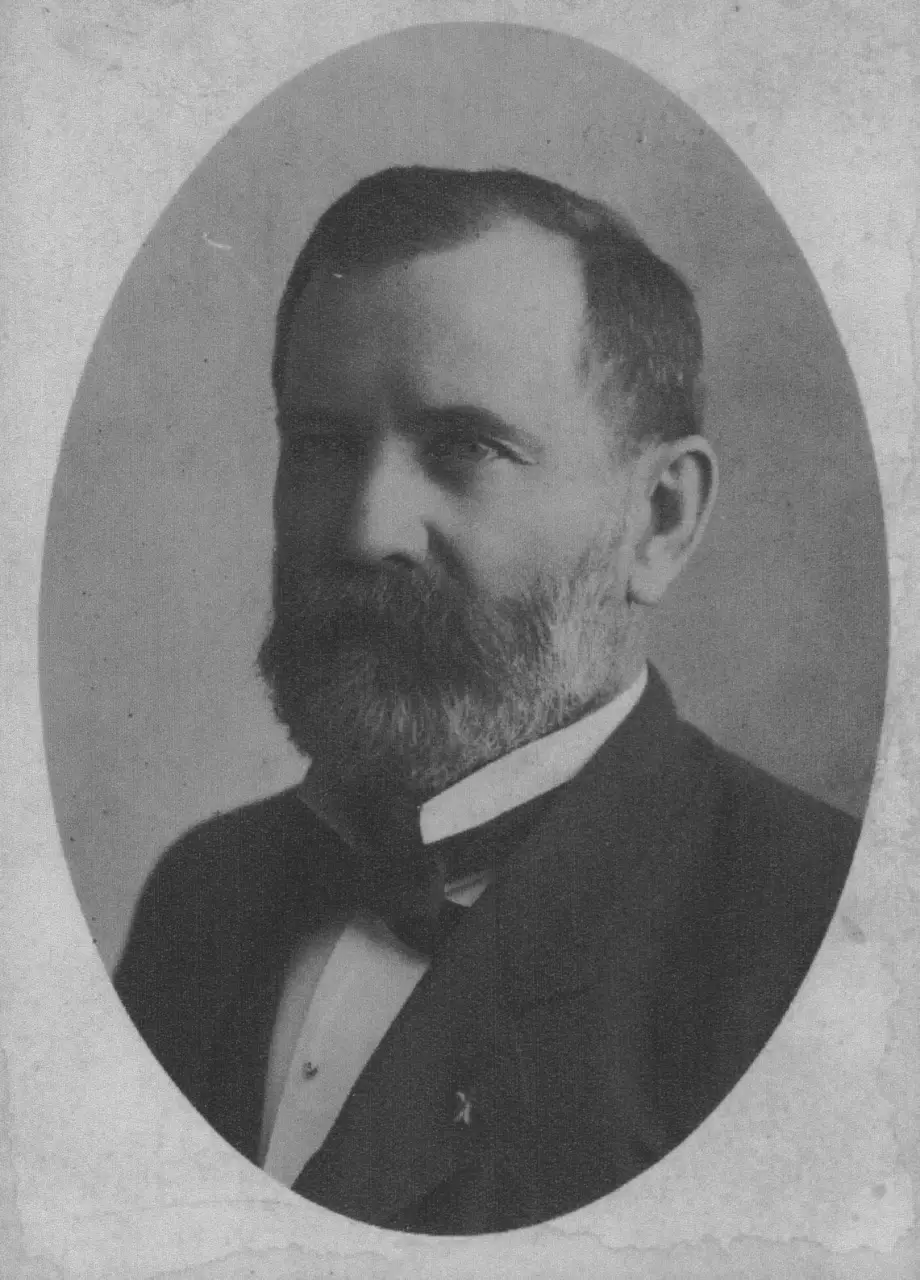
Portrait of Joseph Monier
Period portrait of Horticulturalist-Inventor Joseph Monier (Image Credit: Prabook)

Sacrebleu, zees seemply will not do!” Monsieur Monier decried (not a historical quote), and so he set out to develop a new method of planter construction that would survive the elements. Cement was already a developing technology since before the 1850s, but its dried form was often brittle and would crack easily like clay. Eventually with experimentation, he found that by applying the cement over an iron framework, its hardened form was much stronger and more durable than cement simply poured into a mold.
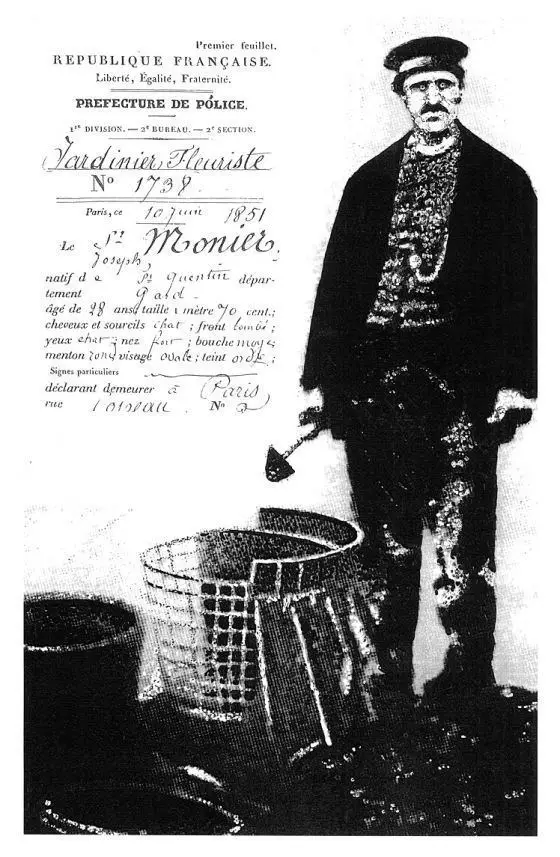
Graphic of French gardener Joseph Monier next to a reinforced concrete planer
Joseph Monier next to his iron-reinforced cement planter (Image Credit: Unkown)

In 1867 he filed the first ever patent for iron-reinforced cement (specifically for garden troughs), and over the next 11 years, filed 4 more patents for applying his cement technology to pipes, slabs, bridges and beams. While there were many contributions to the material science before his time, Monsieur Monier can truly be regarded as the inventor of today’s iron-reinforced cement, which is still the most widespread form of building construction.
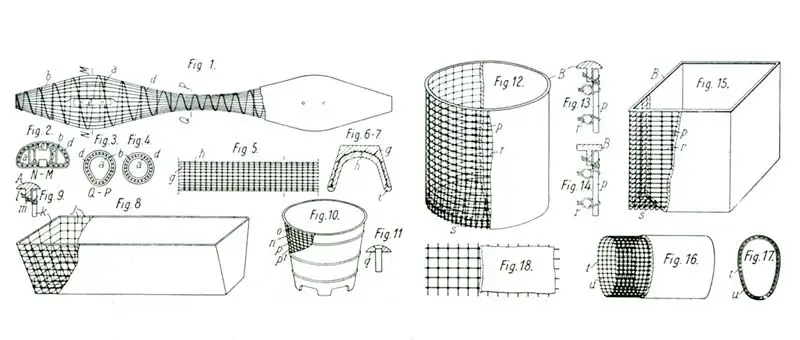
Joseph Monier Reinforced Concrete Schematics
Joseph Monier Reinforced Concrete Schematics (Image Credit: Provence & Beyond)

If Monsieur Monier is the inventor of reinforced cement, why is he sometimes thought to also be the inventor of Faux Bois?

In 1875, Monsieur Monier built the first reinforced-concrete bridge using his patents. The bridge, spanning the moat of the Chateau de Chazelet, stands to this day, and Monsieur Monier designed its columns and railings in the classic faux bois style of tree trunks and branches, which was very en vogue at the time.
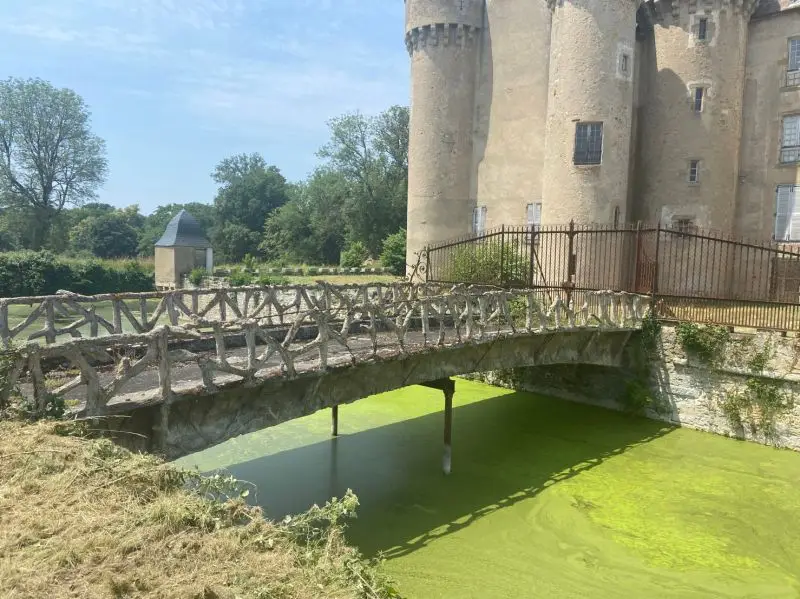
History's first reinforced conrete bridge at the Chateau de Chazelet, done in classic Faux Bois style
History's first reinforced conrete bridge at the Chateau de Chazelet, designed and built by Joseph Monier in classic Faux Bois style (Image Credit: Ecole Française Du Beton)

It is his contribution of reinforced concrete, however, that opened the door for faux bois artistry to truly take off, with its strong foundation allowing for more fantastical and grand expressions of the aesthetic. So in fact, it is more accurate to call Monsieur Monier the father of modern faux bois, rather than the originator of the art style — that honor belongs to the rocailleurs.

Complete faux bois outdoor set
Monier's concrete legacy has led to beautiful outdoor faux bois collections today (Like this set? We can source it for you!)

Enchanté, rocailleurs – nice to meet you!

Rocailleurs, which translates to “rock workers,” are the artisans who continued the Rococo tradition of rocaillage and picturesque garden-making, crafting grottos, cascades and waterfalls, rock structures and more, using man-made materials.

Rocaillage Grotto at the Plateau des Poètes in Béziers
Rocaillage Grotto example at the Plateau des Poètes in Béziers. This entire structure is man-made cement. (Image Credit: Patrimoines du Sud)

While the tradition of rocaillage stretched back centuries, it was the invention of Portland cement (which is the kind we still use today) by Englishman Joseph Aspdin in 1824 that really brought the fading art back into the cultural zeitgeist.

First page of Joseph Aspdin's Portland Cement Patent
First page of Joseph Aspdin's Portland Cement Patent Filing (Image Credit: WikiCommons)
Second page of Joseph Aspdin's Portland Cement Patent
Second page of Joseph Aspdin's Portland Cement Patent Filing (Image Credit: WikiCommons)

The advent of this new material, even before Monier’s reinforced variation, allowed for all new types of structures to be crafted in classic faux bois style. There is no better example of just how en vogue faux bois was in the mid-1800s than the creation of the Parc de Buttes-Chaumont in Paris (which I’ll elaborate on in a moment).

Image of Parc des Buttes-Chaumont by Charles Melville
Drawing of an image of Parc des Buttes-Chaumont by Charles Melville (Image Credit: Paris Musées Collection)

But first, a quick side note about the Renovation of Paris

Paris was not always the beautiful City of Lights that she is today. Over the centuries, the medieval city had grown exponentially, but more importantly, organically, and without any planning. By the 1850s, the city was a giant network of narrow alleys and overcrowded tenement buildings, split in two by the River Seine.

Period photo of Rue Estienne
Period photo of Rue Estienne in Paris - an example of the city before Paris' large-scale renovation (Image Credit: The Met Archives)

In 1852, Napoleon III became emperor, ushering in the era of the Second French Empire, and he wanted to transform France’s capital into a shining beacon of French universal culture. The new emperor tapped Georges-Eugène Haussmann to bring a new sense of grandeur to the city, and Monsieur Haussmann immediately got to work.

Napoleon III (on the left) handing Monsieur Haussmann a decree to expand the size of Paris during the major renovations (Image Credit: Musée Carnavalet)

What exactly did Haussmann do?

Monsieur Haussmann demolished entire sections of the city to make way for the master-planned grand boulevards and squares that connect all of Paris still today.

Avenue de l'Opéra construction during Haussmann's Paris Renovations
Avenue de l'Opéra construction during Haussmann's Paris Renovations. Notice how all the surrounding buildings have had their sides sliced off and torn down to make room for the new avenue. (Image Credit: Paris Musées Collection)

To complement this ongoing new road layout and public works program, Napoleon III also commissioned for the creation of more parks, such as the afore-mentioned Parc de Buttes-Chaumont, along with the Bois de Boulogne and Bois de Vincennes, which are still some of Paris’ most popular and beautiful parks.

Arc de Triomphe from above
View of the Arc de Triomphe from above - the grand boulevards are a direct result from Haussmann's renovations of the city (Image Credit: The Atlantic)

So how is this related to faux bois?

This background about Paris directly ties into the history of faux bois. You see, during the Second French Empire, France was experiencing its own Industrial Revolution (similar to Britain), and the country was rapidly becoming more modernized — industrial production increased, railway lines multiplied and steam power grew. More significantly though, there was a massive shift of population from towns and villages into urban city centers, as people came looking for work in factories.

Postcard of a faux bois bridge in the Bois de Vincennes
Postcard of the Bois de Vincennes with a faux bois bridge in the background (Image Credit: Rocailleur.FR)

Amidst all of the societal changes that these trends of urban modernization were creating, people were desiring for a return to a romanticized nature. The renovation of Paris and the creation of the city’s many new open-air parcs and jardins created the space for faux bois as a design language to flourish.

View of Bois de Boulogne in the center of Paris from the Eiffel Tower (Image Credit: Guilhem Vellut)

Returning to Parc de Buttes-Chaumont

The design and construction of Parc de Buttes-Chaumont is the perfect example of Napoleon III’s public works programs and how integral faux bois was to Haussmann’s renovations.

A period photograph taken in a bustling Parc de Buttes-Chaumont (Image Credit: Un Jour de Plus à Paris)

The park was built on a former gypsum quarry – a nearly desolate landscape on the very edges of the growing city. In fact, Parc des Buttes-Chaumont roughly translates to “the park of the barren hills.”

Buttes Chaumont Gypsum Quarry before construction of the Park
Buttes-Chaumont Gypsum Quarry before construction of the Park (Image Credit: Un Jour de Plus à Paris)
Outskirts of the original Buttes-Chaumont gypsum quarry
Outskirts of the original Buttes-Chaumont gypsum quarry (Image Credit: Paris Musées)

The defining feature of the park is the small island protruding from the center of a man-made lake (waterscaping was also a new technology of the time). The entire cliffside of the island was artificially shaped by rocailleurs with concrete, and then covered with tonnes of dirt to allow vegetation to begin growing again in the new park.

Rocaillage Cliffs in Parc de Buttes-Chaumont, with a faux bois bridge visible (Image Credit: WikiCommons)

To accompany this masterful work of rocaillage, there are faux bois bridges, railings and kiosks in the park. Park construction began in 1864 and was completed in 1867, right in time for the Exposition Universelle de 1867 in Paris. All of this work predates Monsieur Monier’s faux bois bridge of 1875.

Faux Bois railings in front of the man-made lake and rocaillage cliff in Parc des Buttes-Chaumont (Image Credit: Diane Husson Faux Bois Furniture)

And it is not only in Parc des Buttes-Chaumont that we can find faux bois in Paris. From the cascades and artificial cliffs in the Bois de Boulogne, to the parks outside Trocadero, and even to the steps by Sacré-Cœur in Montmartre (where I proposed to Corinne!), faux bois can still be found all over the city today.

Video credit to Virginia-based faux bois furniture artisan Diane Husson @hussonfauxbois

Faux Bois Railings by Trocadero
Faux Bois Railings and Rocaillage Outcropping by Trocadero (Image Credit: Rocailleur FR)

Bienvenue Art Nouveau!

The Art Nouveau movement is centered in beauty and inspiration found in nature, and when it arrived on the cultural scene in 1890(ish), it only helped to fuel the popularity of faux bois. The growing wealthy bourgeoisie in both France and Belgium were looking to embrace a romanticized, man-made nature in their newly acquired country homes, and rocaillage firms were never in higher demand.

Restored private faux bois greenhouse
A restored faux bois greenhouse from a private garden outside of Brussels, Belgium. This is a great example of the bourgeoisie seeking to put faux bois in their country homes (Image Credit: F. Lombaers, 2014)

Here are 3 separate advertisements for prominent rocaillage firms, all taken from a 1901 Parisian classified ads journal. (Image Credit: Bibliothèque Nationale de France Digital Archives)

M. Lecardeur Rocaillage Firm Advertisement
J. Morin Rocaillage Firm Advertisement
Combaz Frères Rocaillage Firm Advertisement

Notice in the third advertisement for Combaz Frères the cliffs of Parc des Buttes-Chaumont — they were the firm that was hired to create the rocaillage of many of Napeolon III’s new parks.

Parc des Buttes-Chaumont under construction, before the man-made lake was filled
Parc des Buttes-Chaumont under construction, before the man-made lake was filled (Image Credit: Roger-Viollet)
A postcard of the rocaillage cliffs of Buttes-Chaumont (Image Credit: Rocailleur.FR)

This entire movement and related trends took place during La Belle Époque – a period during which optimism, prosperity, artistic blooming and general confidence in modern life flourished.

The end of faux bois’ golden age

In 1914, the assassination of Austrian Archduke Franz Ferdinand exploded a societal powder keg in Europe and quickly plunged the entire continent into war. WW1, La Grande Guerre, had arrived, and the beautiful era of La Belle Époque — the golden age of Art Nouveau and faux bois — came crashing down.

Front page of a period newspaper published the day after Ferdinand's assassination
Front page of a period newspaper published the day after Ferdinand's assassination (Image Credit: WikiCommons)

After the end of the horrific war in 1918, the cultural fascination with a romanticized and whimsical nature had completely vanished, instead replaced by a theme of machines and technology. This universal, mechanical trend was soon embodied by the sleek Art Deco movement of the early 1920s.

Official 1925 poster for Exposition internationale des arts décoratifs et industriels modernes from which the Art Deco movement gets its namesake
Official 1925 poster for 'Exposition internationale des arts décoratifs et industriels modernes' from which the Art Deco movement gets its namesake (Image Credit: Minneapolis Institute of Art)

Crossing Continents

While faux bois may have faded from the height of its popularity in Europe by the time of Art Deco’s arrival, the craft was continued in Mexico and other countries, carried on in the trabajo rústico tradition — rustic sculptural work with concrete to craft imitation wood and rock.

Dionicio Rodríguez
Dionicio Rodríguez (Image Credit: The Cultural Landscape Foundation)

Mexican-born trabajo rústico artist and architect Dionicio Rodríguez moved to San Antonio, TX, in 1924, and is credited as one of the most well known artisans to continue the tradition of faux bois in America. Many of his faux bois works are listed in the National Register of Historic Places, and in fact, he even has sculptures at our Houston Zoo!

Streetcar stop in San Antonio, TX, done by Dionicio Rodríguez in faux bois and trabajo rústico (Image Credit: UT San Antonio Digital Archives)
Dionicio Rodriguez' faux bois tree sculptures at the Houston Zoo
Dionicio Rodriguez' faux bois tree sculptures at the Houston Zoo (Image Credit: Etee Flickr)

Faux Bois Today

Like any design trend, the popularity of faux bois has ebbed and flowed, but a simple tag search for #fauxbois on Instagram shows that the aesthetic is still going strong. From artisans who continue the craft of faux bois, to dealers who source original European pieces, to everyday folk who just enjoy the art form, faux bois is a design language that will always be seated at the timeless table of great style.

We currently have a wide selection of reproduction, vintage, and antique faux bois at our Houston Shop.

A sample of our Faux Bois selection at our Houston Shop
A sample of our new, vintage and antique Faux Bois selection at our Houston Shop

I’m obsessed with these antique stump planters we have from the 1880s.

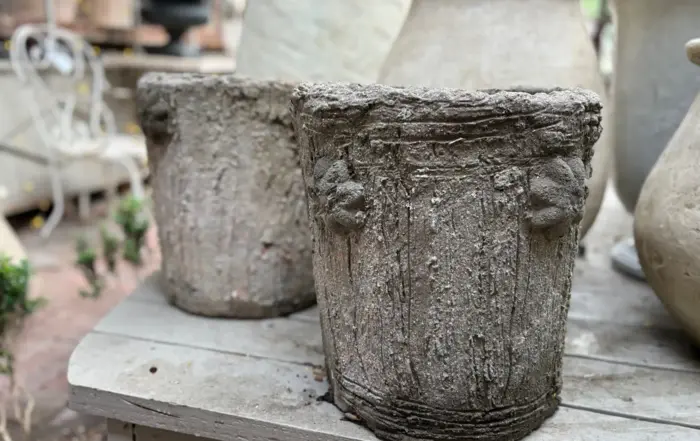
Late-1800s Faux Bois Stump Planters at our Houston Shop
A pair of antique faux bois stump planters from the late-1800s

We can clearly date the pair because it is concrete poured over an iron skeleton (so post-Monsieur Monier’s 1867 patent), the exposed skeleton shows signs of advanced rust, and the cement consists of a primitive shale that was common at the end of the century — a true piece of faux bois history.

The rusting iron frame inside late-1800s faux bois stump pots
A detail shot of the rusting iron frame and period shale in late-1800s faux bois stump planters at our Houston Shop

Phew!

If you made it all the way here to the end with me, know how pleased I am that you enjoyed the story of faux bois enough to read what is my most detailed provenance article yet. All of my faux bois research was a learning journey for myself — it was actually that exposed iron skeleton in those stump planters that caught my eye and piqued my interest to learn more about them. Little did I know it would lead me down a month-long research hole about faux bois and inspire me to write another provenance story!

Examples of our Faux Bois selection at our Houston Shop
Some examples of our Faux Bois selection at our Houston Shop

Until next time, mes amisà bientôt!

The French Art of Beautiful Storage
Post

Sign up to hear about upcoming events at all of our locations, from exclusive container first-looks to Saturday sip & shops.

Merci! You'll be the first to know about our upcoming events at all of our locations.
Oh zut! Some fields are incomplete. Please check your info and try again.

Leave A Comment